




No products in the cart.
new-10%On Sale
Tren A Steroid 100mg 10 ml NV: Effects, Risks, Half-Life
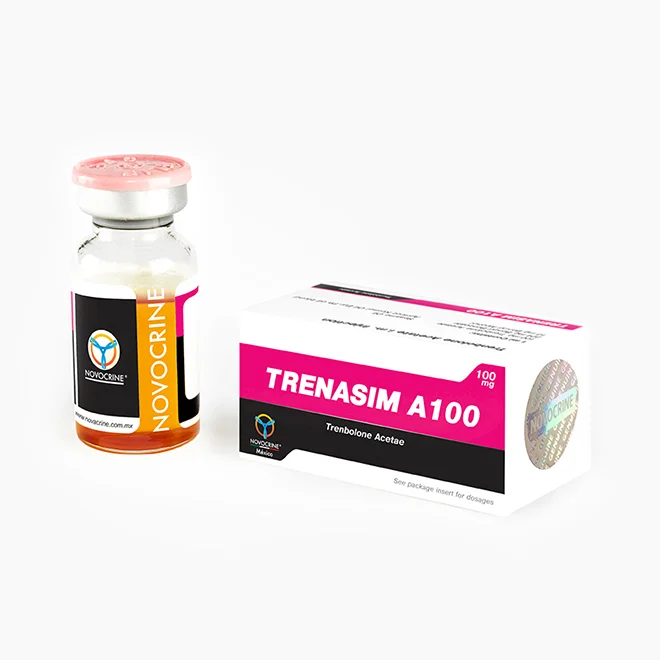
Tren A Steroid 100mg 10ml NV – Novocrine is an injectable trenbolone acetate formulation containing 100mg/ml in a 10ml vial. Its short-acting acetate ester is associated with powerful anabolic-androgenic effects, while important risks include cardiovascular strain, hormonal suppression, lipid changes, and other systemic adverse effects. Compared with Tren E, Tren A has a shorter release profile and a faster decline in circulating drug levels.
Original price was: 110.00$.99.00$Current price is: 99.00$.
Description
Tren A Steroid: Trenbolone Acetate Effects, Muscle Growth, Risks, and Tren A vs E
Tren A steroid usually refers to trenbolone acetate, an ester of the synthetic anabolic-androgenic steroid trenbolone. “Tren” names the underlying steroid, while “A” identifies its acetate form. Trenbolone enanthate, commonly called Tren E, contains a different ester attached to the same underlying steroid molecule.
Trenbolone’s reputation for changing muscle mass and body composition has a genuine pharmacological foundation. Experimental research has demonstrated changes in muscle protein metabolism and muscle growth; these effects should not be dismissed as imaginary simply because bodybuilding is not an approved medical indication. However, experimental effectiveness does not establish a safe human bodybuilding regimen or predict the results of an unregulated product.
Understanding trenbolone therefore requires separating three questions: What does the compound actually do? How directly does the evidence apply to humans? What risks accompany those effects?
This article provides educational information, not a prescription, individualized cycle, or endorsement of nonmedical steroid use.
What Is Tren A Steroid?
Is Tren a steroid?
Yes. Tren is shorthand for trenbolone, an anabolic-androgenic steroid. Tren A specifically means trenbolone acetate. It is not a dietary supplement, a protein powder, or a different category of muscle-building ingredient.
The word anabolic describes effects associated with tissue building. Androgenic describes effects involving androgen-responsive tissues and sexual development. These activities overlap: a compound that stimulates muscle-related pathways can also influence reproductive function and other organs.
Why is trenbolone associated with cattle?
Trenbolone acetate has an established veterinary role in certain growth-promoting implants for cattle. The FDA explains that approved steroid hormone implants can increase growth rates and improve feed efficiency in designated food-producing animals. These products operate under specific animal-drug approvals; their existence does not establish approval for injectable human bodybuilding products.
This veterinary history is relevant because it demonstrates a practical growth-promoting application. It does not, by itself, establish an appropriate human dose, long-term safety profile, or expected bodybuilding outcome.
How Does the Tren Anabolic Steroid Work?
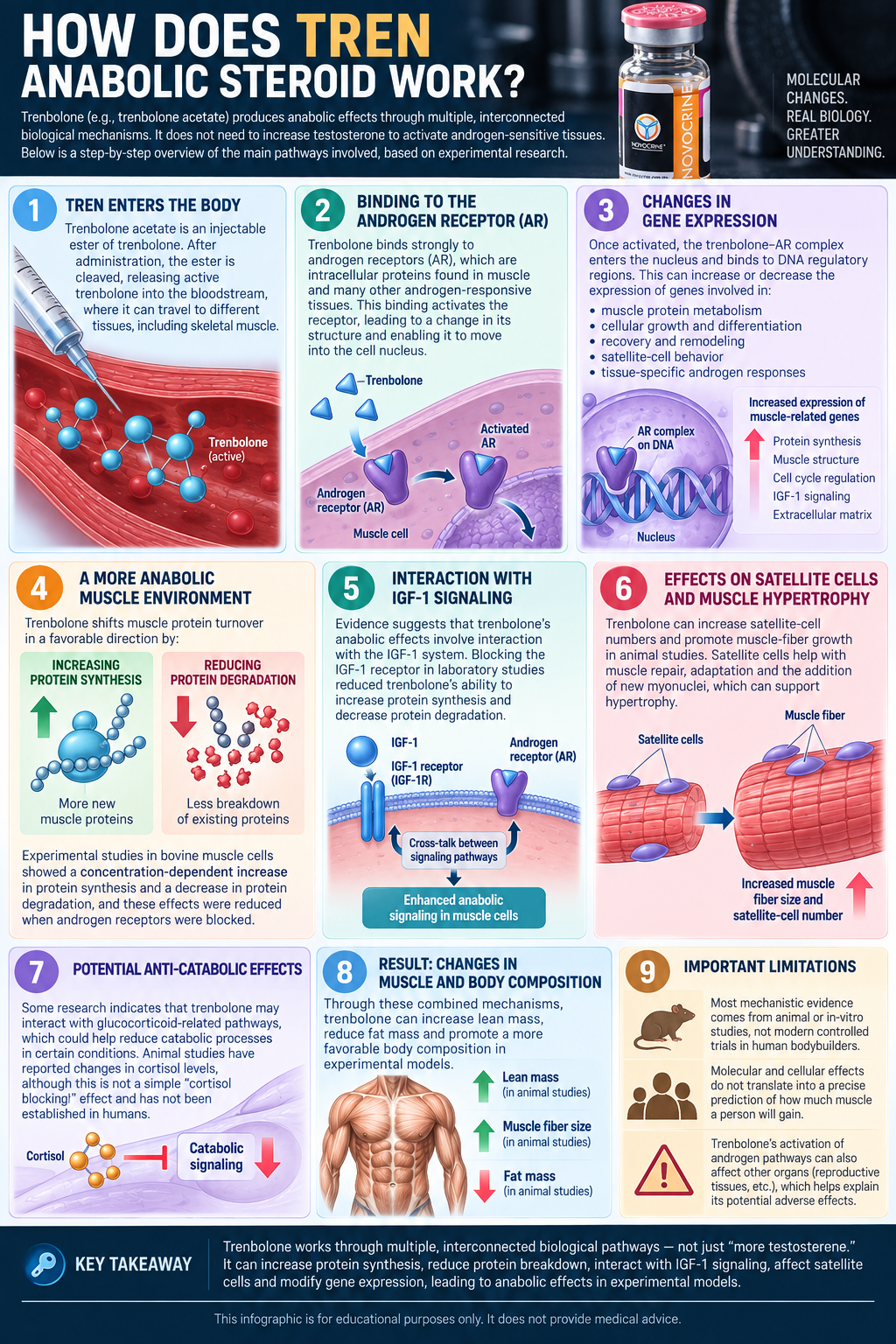
Trenbolone is not simply a compound that “raises testosterone” or produces muscle growth through one isolated pathway. Its anabolic effects appear to involve androgen-receptor signaling, changes in muscle protein turnover, interactions with IGF-1 signaling, satellite-cell activity, and broader changes in tissue metabolism. Most mechanistic research comes from cultured muscle cells, livestock, and rodent models rather than modern controlled trials in bodybuilders, so the biological mechanisms are much better established than the exact magnitude of the effects in humans.
That distinction matters. Trenbolone clearly has pharmacological anabolic activity, but individual bodybuilding outcomes cannot be calculated directly from receptor-binding studies or animal experiments.
Androgen Receptor Activation: The Central Mechanism
The androgen receptor, or AR, is one of the principal molecular targets through which trenbolone produces its effects.
Androgen receptors are intracellular proteins found in skeletal muscle and many other androgen-responsive tissues. When an androgen such as trenbolone interacts with the receptor, the receptor becomes activated and can influence cellular activity. In the classical genomic pathway, the activated androgen-receptor complex ultimately interacts with DNA regulatory regions and modifies the expression of androgen-responsive genes.
In skeletal muscle, those changes can affect pathways involved in:
- muscle protein metabolism;
- cellular growth and differentiation;
- recovery and remodeling;
- satellite-cell behavior;
- tissue-specific responses to androgen signaling.
This is why describing trenbolone as merely “boosting testosterone” is misleading. Trenbolone produces androgen-receptor signaling through its own pharmacological activity. It does not need to increase endogenous testosterone to activate androgen-sensitive tissues.
The same principle also explains why anabolic and androgenic effects cannot be completely separated. Androgen receptors exist outside skeletal muscle, meaning that a compound capable of driving substantial muscle-related signaling can simultaneously affect reproductive tissues and other androgen-sensitive organs.
From Androgen Receptor Activation to Changes in Gene Expression
Androgen-receptor activation is only the beginning of the process.
Once activated, the receptor can alter transcription—the process through which cells determine which genes are expressed and how strongly they are expressed. This provides one mechanism through which a relatively small circulating signaling molecule can produce much larger downstream changes in cellular behavior.
Research involving androgen exposure in cattle has documented changes in the expression of numerous muscle-related genes. In one study involving a trenbolone acetate/estradiol implant, researchers observed altered expression of genes involved in extracellular matrix biology, the cell cycle, muscle-fiber characteristics, and IGF-1 signaling.
These findings support a broader interpretation of trenbolone’s activity: it does not simply “force protein into the muscle.” Instead, androgen signaling can modify the biological environment that regulates muscle growth, remodeling, and tissue composition.
However, gene-expression changes should not automatically be interpreted as proportional increases in visible muscle mass. A molecular signal demonstrates biological activity; it does not provide a direct kilograms-of-muscle prediction.
Trenbolone Can Shift Muscle Protein Turnover in an Anabolic Direction
Skeletal muscle size depends largely on the relationship between two ongoing processes:
muscle protein synthesis — the creation of new muscle proteins;
and
muscle protein degradation — the breakdown and removal of existing proteins.
Net muscle accretion becomes more favorable when synthesis increases relative to breakdown.
A controlled laboratory study using fused bovine satellite-cell cultures found that trenbolone acetate caused a concentration-dependent increase in protein synthesis and a decrease in protein degradation. When androgen-receptor signaling was blocked with flutamide, these trenbolone-induced changes were reduced, supporting an important role for the androgen receptor.
This is one of the more important mechanistic findings because it demonstrates that trenbolone can influence both sides of the muscle-protein equation rather than acting solely through increased synthesis.
Conceptually, this means trenbolone may support an anabolic environment through:
more protein being synthesized + less existing protein being degraded.
That dual effect helps explain why trenbolone has historically been effective at promoting lean-tissue growth in animal-production systems.
The limitation is equally important: these experiments were performed in bovine muscle cells. They demonstrate a real biological mechanism, but they do not establish how much muscle a trained human will gain, how quickly it will occur, or what exposure would be required to produce it.
IGF-1 Signaling Appears to Participate in the Anabolic Response
The androgen receptor does not appear to operate in isolation.
The same bovine muscle-cell research found that blocking IGF-1 receptor (IGF-1R) activity reduced the trenbolone-induced increase in protein synthesis and decrease in protein degradation. This suggests interaction between androgen signaling and the IGF-1 system.
IGF-1 is closely involved in skeletal-muscle growth, cellular survival, differentiation, and adaptation. Therefore, trenbolone’s anabolic effects may partly depend on communication between androgen-related pathways and growth-factor signaling.
Research in cattle has also found increased circulating IGF-1 under some trenbolone-containing implant conditions, although these studies frequently used trenbolone acetate together with estradiol and therefore cannot isolate the contribution of trenbolone alone.
It is reasonable to say:
trenbolone interacts with pathways involving IGF-1 signaling.
It is much less defensible to say:
trenbolone simply raises IGF-1 by a fixed percentage and therefore produces a predictable amount of muscle growth.
The experimental evidence supports pathway interaction, not a universal bodybuilding formula.
Trenbolone May Also Use Rapid, Non-Genomic Signaling Pathways
Androgen effects are often explained only through the classical model:
androgen → androgen receptor → nucleus → gene transcription.
That model is important, but it may not explain the entire response.
Later experiments with bovine satellite cells found evidence that trenbolone acetate-induced changes in protein turnover also involve signaling through G-protein-coupled receptors, matrix metalloproteinases, heparin-binding EGF, EGFR/ErbB2, and IGF-1R. Blocking components of this pathway reduced trenbolone-related changes in protein synthesis and degradation.
These pathways are sometimes described as non-genomic androgen signaling because they can begin rapidly at or near the cell membrane rather than depending entirely on direct androgen-receptor-driven transcription inside the nucleus.
This adds an important layer to the mechanism:
Trenbolone’s anabolic activity probably cannot be reduced to a single receptor binding event. Experimental evidence suggests that androgen signaling interacts with multiple growth-factor and intracellular signaling networks that collectively influence muscle protein turnover.
Satellite Cells and the Capacity for Muscle Hypertrophy
Muscle growth is not determined exclusively by the amount of protein being synthesized at a particular moment.
Satellite cells are muscle-associated progenitor cells involved in adaptation, regeneration, and hypertrophy. Under appropriate stimuli, they can become activated and participate in muscle-fiber remodeling.
Rodent research comparing testosterone and trenbolone enanthate found that both treatments substantially increased muscle-fiber cross-sectional area and increased satellite-cell numbers compared with androgen-deprived controls. In that experiment, the trenbolone group showed approximately a 94% greater muscle-fiber cross-sectional area and a 178% increase in satellite-cell number relative to the orchiectomized control group.
Those are striking biological findings, but the context matters enormously.
The study involved androgen-deprived rats and a highly androgen-responsive muscle. These percentages should not be presented as expected muscle gains in healthy human bodybuilders.
What the study does support is a more defensible statement:
trenbolone exposure can promote true skeletal-muscle hypertrophy and increase satellite-cell abundance in an experimental mammalian model.
That is stronger and more scientifically accurate than saying users merely “feel fuller” or experience a visual illusion.
Does Trenbolone Work by Blocking Myostatin?
This is another area where bodybuilding explanations frequently become too simplistic.
Myostatin is a signaling protein that acts as a negative regulator of skeletal-muscle growth. Because inhibiting myostatin can promote dramatic hypertrophy in certain experimental settings, trenbolone is sometimes described online as a “myostatin blocker.”
The available research does not support that simple characterization.
In the rodent study described above, trenbolone increased muscle-fiber size and satellite-cell number, yet mature myostatin protein expression actually increased rather than decreased.
The study also found changes in several genes and signaling proteins associated with the myostatin pathway.
This demonstrates why individual biomarkers cannot always be interpreted in isolation. Muscle hypertrophy can occur even while one supposedly “anti-growth” protein increases, because physiological growth depends on the net interaction between numerous anabolic and catabolic pathways.
Therefore, a more accurate statement is:
Trenbolone clearly affects skeletal-muscle growth pathways, including pathways related to myostatin signaling, but current evidence does not justify describing its anabolic effect as simply “blocking myostatin.”
Anti-Catabolic Effects and the Glucocorticoid Question
Another proposed explanation for trenbolone’s anabolic reputation involves glucocorticoids.
Glucocorticoids such as cortisol participate in stress responses and can promote catabolic processes in skeletal muscle under certain physiological conditions. Older animal research investigated whether trenbolone’s anabolic effects might partly involve interaction with muscle glucocorticoid receptors or opposition to glucocorticoid-driven catabolism.
Cattle studies have also reported changes in circulating cortisol under some trenbolone-containing implant conditions. For example, one study found reduced cortisol during part of the finishing phase in treated steers.
However, the evidence does not support reducing trenbolone’s action to the popular phrase “it blocks cortisol.”
That phrase implies a simple and universal pharmacological effect that has not been established in humans.
The stronger conclusion is that androgen signaling may interact with catabolic pathways, and this interaction could contribute to the net balance between muscle synthesis and breakdown. The magnitude and relevance of that mechanism in healthy human athletes remain uncertain.
Why Trenbolone Can Increase Lean Tissue Without “Increasing Testosterone”
A common misunderstanding is that every anabolic steroid works because it raises testosterone.
That is not how exogenous anabolic-androgenic steroids function.
Trenbolone itself can activate androgen-responsive pathways. Therefore, its anabolic activity does not require the testes to produce more testosterone.
In fact, strong exogenous androgenic signaling generally produces negative feedback on the hypothalamic-pituitary-gonadal axis. The body detects androgenic signaling and may reduce its own reproductive hormone output.
This means two things can occur simultaneously:
strong androgen-receptor activity in muscle
and
suppression of endogenous testosterone production.
There is no contradiction between those effects. The first reflects what the external androgen is doing at target tissues; the second reflects how the endocrine system responds to that external signal.
This is why phrases such as “Tren boosts testosterone” should generally be avoided. Trenbolone acts as an androgen; it does not need to stimulate natural testosterone production to exert anabolic effects.
Why Trenbolone Can Change Body Composition Beyond Muscle Alone
The anabolic effect is not necessarily limited to increasing muscle tissue.
In a six-week rodent study, trenbolone treatment increased lean mass by approximately 11% while reducing fat mass by approximately 37%. These findings demonstrate that trenbolone can produce substantial body-composition changes in at least one experimental mammalian model.
Livestock studies have similarly reported greater lean-tissue proportions and lower adipose-tissue proportions in some animals treated with trenbolone-containing implants.
Again, these results should not be converted into expected human percentages.
Instead, they support the biological plausibility of why trenbolone has become associated with a physique displaying:
- greater muscularity;
- higher lean-to-fat mass ratio;
- more visible muscle contours;
- greater apparent definition when subcutaneous fat is sufficiently low.
Those appearance-related outcomes can have a genuine physiological basis even though the exact magnitude has not been established in controlled bodybuilding trials.
The Mechanism Is More Than “Protein Synthesis”
It is tempting to summarize trenbolone as simply increasing protein synthesis, but the available evidence points toward a broader network.
Experimental studies collectively suggest involvement of:
androgen-receptor activation → altered gene expression → increased protein synthesis → reduced protein degradation → interaction with IGF-1 signaling → changes in satellite-cell biology → tissue remodeling and hypertrophy.
The relative contribution of each mechanism likely varies by tissue, species, hormonal environment, nutritional status, and duration of exposure.
This complexity is important because it prevents two opposite errors.
The first error is to dismiss trenbolone’s effects as bodybuilding folklore. Experimental research clearly demonstrates real anabolic biological activity.
The second error is to assume that identifying a molecular mechanism automatically proves the magnitude of its effects in humans. It does not.
Why “Tren Is Five Times Stronger Than Testosterone” Is Scientifically Misleading
The claim that trenbolone is “five times more anabolic than testosterone” appears frequently in bodybuilding literature.
The problem is that “five times stronger” has no scientific meaning unless the endpoint is defined.
Possible endpoints include:
- androgen-receptor binding affinity;
- receptor activation;
- transcription of a particular gene;
- growth of a specific androgen-responsive tissue;
- whole-body lean mass;
- muscle-fiber hypertrophy;
- strength;
- nitrogen retention.
A drug can outperform another compound on one endpoint without producing the same numerical advantage on another.
Animal research illustrates the problem well. In one rodent experiment, both testosterone and trenbolone produced large increases in muscle-fiber cross-sectional area and satellite-cell numbers, but trenbolone did not produce anything resembling a straightforward five-fold superiority in those outcomes.
Consequently:
high androgen-receptor potency ≠ five times more muscle.
Likewise:
greater activity in one animal assay ≠ five times more strength in humans.
A more scientifically defensible description is that trenbolone is a highly active anabolic-androgenic compound with substantial effects on androgen-responsive tissues, while the exact ratio of its anabolic effectiveness to testosterone depends on the experimental model and outcome being measured.
What the Mechanistic Evidence Actually Allows Us to Conclude
Taken together, the research supports several strong conclusions.
Trenbolone has real anabolic activity. It can activate androgen-responsive signaling, alter muscle protein turnover, interact with IGF-1-related pathways, influence satellite-cell biology, produce skeletal-muscle hypertrophy in animal models, and substantially alter body composition under experimental conditions.
What the evidence does not provide is a reliable mathematical conversion from molecular potency to human bodybuilding results.
There is no scientifically validated equation stating that a particular receptor affinity produces a specific number of kilograms of muscle, a specific percentage reduction in fat, or a specific increase in strength.
That distinction is central to understanding how the Tren anabolic steroid works:
the biological mechanisms are real and measurable; the exact magnitude of the physique response in human nonmedical use remains much less precisely characterized.
Does Trenbolone Actually Build Muscle?
Experimental evidence supports genuine muscle growth
Yes—experimental studies support a real anabolic effect.
In a rat study, trenbolone increased the mass of an androgen-responsive muscle group while also affecting adiposity, bone-related outcomes, and other tissues. These were measured biological changes, not subjective assessments of whether the animals looked more muscular. However, growth in a particularly androgen-sensitive rodent muscle cannot be translated directly into a percentage increase in total human muscle mass.
A separate rodent study involving trenbolone enanthate documented increased muscle fiber size and satellite cell number. Interestingly, mature myostatin protein also increased, despite the hypertrophy. That finding challenges the simplistic claim that trenbolone builds muscle by universally “switching off myostatin.”
The defensible conclusion is that trenbolone can stimulate actual muscle tissue growth, while the magnitude and mechanisms vary with the experimental model.
Has trenbolone ever been studied in humans?
It would be inaccurate to say that trenbolone has never been investigated in humans.
A historical FAO/WHO evaluation summarizes a short human study that reported nitrogen retention after trenbolone acetate administration. The evaluation also describes menstrual disturbances in some women. Nitrogen retention is relevant to anabolic activity, but it is not the same endpoint as a modern measurement of skeletal muscle hypertrophy or athletic performance.
The evidence gap is therefore more specific: the available literature does not establish modern, well-controlled bodybuilding protocols with dependable estimates of muscle gain and long-term safety.
What do human users report?
A qualitative study published in 2023 documented perceived physique and training benefits alongside substantial adverse experiences. Eight of its 16 interview participants had personally used trenbolone. These accounts help explain its appeal, but interviews cannot isolate trenbolone from concurrent training, diet, other steroids, or expectations.
A visible transformation can be real while its exact attribution remains uncertain.
What the evidence can—and cannot—establish
| Finding | What it supports | What it does not establish |
|---|---|---|
| Changes in cultured muscle-cell protein balance | Direct anabolic biological activity | A predictable human muscle-gain rate |
| Muscle enlargement in rodents | Actual tissue growth under experimental conditions | Equivalent growth in human bodybuilders |
| Historical human nitrogen retention | Human anabolic activity on a biochemical endpoint | A validated modern bodybuilding cycle |
| Positive user accounts | Reported real-world experiences | Controlled estimates of efficacy or safety |
These distinctions preserve the findings without treating different forms of evidence as interchangeable.
Does Tren A Burn Fat or Improve Body Composition?
Animal research shows more than a purely visual effect
There is experimental evidence that trenbolone can alter both lean and fat mass.
In a small six-week study involving 12 male rats, the trenbolone-treated group experienced an approximately 11% increase in lean mass and 37% reduction in fat mass. These findings support a genuine body-composition effect in that model—not simply an appearance created by lighting or water changes. The investigators also examined metabolic outcomes.
However, those percentages describe rats under a specific experimental protocol. They are not expected results for people using Tren A, and the experiment did not validate a human fat-loss treatment.
The appropriate interpretation is neither “trenbolone has no effect on fat mass” nor “trenbolone guarantees rapid human fat loss.” The preclinical effect is real; its magnitude, reliability, and safety in humans remain insufficiently established.
Why muscles can look harder and more defined
A physique can look more defined when there is more muscle relative to the tissue covering it. Increasing muscle size, preserving muscle while body fat falls, or combining both changes can make muscular contours more visible.
Applied to trenbolone, this is a physiological interpretation consistent with the experimental evidence, rather than a separately proven “hardening” mechanism. It does not mean the drug physically transforms soft muscle into a different kind of tissue.
Terms such as hardness, density, and dryness describe appearance. They are not standardized clinical measurements.
Does Tren A remove water?
Trenbolone is nonaromatizable: it does not undergo the same conversion to estrogen that testosterone does. This helps explain why discussions distinguish its appearance-related effects from those of aromatizable steroids.
But nonaromatizing does not mean diuretic. The absence of that conversion pathway does not prove that trenbolone removes subcutaneous water, prevents all fluid retention, or guarantees a particular appearance.
Similarly, increased visible vascularity should not automatically be described as evidence that trenbolone has created new veins. A more muscular, leaner physique can make existing structures more apparent.
Tren A vs E: What Is the Difference?
The central distinction in Tren A vs E is the ester attached to trenbolone.
| Feature | Tren A | Tren E |
|---|---|---|
| Full name | Trenbolone acetate | Trenbolone enanthate |
| Underlying steroid | Trenbolone | Trenbolone |
| Ester | Acetate | Enanthate |
| Commonly described release profile | Shorter-acting | Longer-acting |
| Does the ester create a different anabolic steroid? | No | No |
| Does the ester establish human safety? | No | No |
Chemical research identifies acetate and enanthate as distinct esterified forms of trenbolone. Research literature commonly describes acetate as shorter-acting and enanthate as longer-acting, but those descriptions should not be mistaken for a validated head-to-head clinical comparison of commercial bodybuilding formulations.
Is Tren A stronger than Tren E?
Changing the ester does not create a different underlying androgen. It changes the molecular form in which that androgen is delivered.
Claims that one ester inherently produces “harder muscle,” “better-quality gains,” or fewer systemic adverse effects require evidence beyond their different release profiles. A chemical comparison does not establish those clinical outcomes.
Shorter persistence also should not be confused with immediate reversal of an adverse effect. Drug exposure, tissue responses, and hormonal recovery are different processes.
Tren A Half-Life: What Can Be Stated Reliably?
Online half-life tables often present precise values without identifying the formulation, administration route, species, or source of the estimate. Those omissions matter.
A human study published in 2020 investigated trenbolone metabolism by administering an isotope-labeled compound and analyzing urinary metabolites. It demonstrated that human metabolism research exists, but it was not a clinical validation of the half-life of underground Tren A or Tren E injections.
For a practical comparison, acetate is generally discussed as the shorter-acting ester and enanthate as the longer-acting ester. The available sources reviewed here do not justify presenting one universal numerical human half-life for every formulation.
Three timelines must remain separate: the decline in circulating drug, the recovery of suppressed reproductive function, and the detectability of metabolites. Research on human metabolism and post-androgen recovery addresses different endpoints; one cannot reliably substitute for the other.
Trenbolone Steroid Side Effects: What the Evidence Shows
An informative discussion should distinguish trenbolone-specific findings, anabolic-steroid class effects, and unconfirmed user reports. Combining them into one undifferentiated list exaggerates certainty.
Blood pressure, cholesterol, and cardiovascular strain
In the prospective HAARLEM study, researchers followed 100 men using anabolic steroids. During exposure, participants experienced average increases in blood pressure, unfavorable changes in lipid measures, and increased hematocrit. Many measured changes improved after discontinuation. This was a study of real-world androgen use, not a trial isolating trenbolone.
Longer-term observational research has also associated anabolic-steroid use with impaired heart function and greater coronary plaque burden. These findings reinforce cardiovascular concern, although they do not provide a precise trenbolone-specific risk estimate for an individual.
A lean appearance, strong gym performance, or the absence of immediate symptoms cannot substitute for cardiovascular assessment.
Testosterone suppression and fertility
Exogenous androgen exposure can suppress the reproductive hormone system that supports natural testosterone and sperm production.
In the HAARLEM study’s reproductive analysis, testosterone recovered within approximately three months in most participants, while sperm production generally took longer—around a year. Recovery varied, and these findings involved mixed androgen exposure rather than trenbolone alone.
“Tren completely shuts everyone down permanently” is therefore too absolute. But “normal testosterone will return as soon as the drug clears” is also unsupported. Suppression can be substantial, and recovery cannot be predicted reliably from the ester name.
Mood, sleep, and psychological effects
A 2026 international study compared 237 men reporting trenbolone use with 909 men using other anabolic steroids. Trenbolone users reported more of several psychological and physical harms, including mood instability, irritability, depressive symptoms, and heart or liver concerns.
The study was cross-sectional and relied on self-report. Participants using trenbolone also differed in other drug-use patterns. It therefore identifies concerning associations, not proof that trenbolone alone caused every reported problem.
Earlier qualitative research also described sleep disruption and adverse effects on emotions and relationships. These reports deserve attention, but they cannot establish the percentage of users who will experience a particular symptom.
Liver injury
Injectable administration does not eliminate hepatic risk.
A published case report described cholestatic hepatitis in a bodybuilder, with clinical investigation and liver biopsy supporting trenbolone enanthate as the probable cause. This is an important safety signal, although one case cannot establish incidence or imply that every user will develop liver failure.
Jaundice, persistent itching, dark urine, or unexplained loss of appetite warrant medical evaluation rather than an assumption that injections are liver-safe.
Kidney concerns
Researchers have described serious kidney disease, including focal segmental glomerulosclerosis, in bodybuilders with long-term anabolic-steroid exposure. A series involving ten bodybuilders documented proteinuria and kidney injury, but it did not isolate a trenbolone-only risk.
That distinction matters: kidney concerns are legitimate, while claims that trenbolone predictably causes kidney failure in every user go beyond the evidence.
Acne, hair changes, and effects in women
Anabolic-androgenic steroids can cause acne, hair changes, menstrual disturbances, and virilization. Some androgenic changes in women, including voice deepening, may persist after discontinuation. A product marketed as “clean,” “dry,” or suitable for cutting does not remove these risks.
What is “Tren cough”?
“Tren cough” is an informal label rather than a standardized diagnosis.
Medical literature includes acute respiratory distress after accidental vascular exposure to an oil-based steroid preparation. Such reports support concern about acute respiratory reactions, but they do not establish the mechanism of every cough attributed to trenbolone.
Coughing is not proof of authenticity or potency. Breathing difficulty, chest pain, fainting, or severe persistent symptoms require urgent medical assessment.
Is There an Evidence-Based Tren A Bodybuilding Cycle?
The studies discussed here do not establish a standardized human bodybuilding regimen with a dependable balance of benefit and harm. Experimental muscle growth, historical nitrogen retention, and user reports cannot be combined into a clinically validated cycle.
The same limitation applies to universal post-cycle therapy claims. Research on recovery after mixed anabolic-steroid exposure does not establish one Tren-specific treatment that reliably restores hormones and fertility in everyone. Medical decisions depend on symptoms, laboratory findings, exposure history, and reproductive goals.
Monitoring can identify problems; it cannot certify that continued exposure is safe. Similarly, improved laboratory results after stopping do not retrospectively prove that an exposure caused no harm.
Tren Steroid Products: Labels, Color, and Quality
What does “100 mg/mL, 10 mL” mean?
These measurements describe different things.
100 mg/mL states the claimed concentration: the amount of drug in each milliliter. 10 mL states the container’s claimed volume. Neither number specifies an appropriate dose, demonstrates laboratory verification, or proves that the product contains the stated ingredient.
This distinction is particularly important in an unregulated market, where a professional-looking label can coexist with incorrect contents.
Can Tren steroid color prove authenticity?
No. Color is not an analytical identity or potency test.
Chemical testing—not the shade of an oil, its packaging, or a user’s reaction—is what can investigate whether a sample contains a claimed substance. In a 2025 Australian study, researchers tested 28 anabolic-steroid products and found that 15 were mislabeled or missold. Among two products expected to contain trenbolone acetate, one instead contained testosterone acetate.
The sample was small and geographically limited, so those results should not be generalized into a failure rate for every seller. They nevertheless demonstrate why labels and appearance cannot establish composition.
Does a certificate of analysis prove an injectable is safe?
An analytical result only answers the questions its testing methods address.
A test for chemical identity or concentration does not automatically establish sterility, acceptable bacterial endotoxin levels, or consistent manufacturing. FDA pharmaceutical microbiology guidance treats these as distinct quality-control concerns.
Even correctly identified, accurately concentrated material can retain the drug’s inherent pharmacological risks. Product quality and clinical safety are related, but they are not the same claim.
Are there evidence-based “best Tren brands”?
The studies cited here do not establish a validated ranking of the best trenbolone brands for human bodybuilding. Customer ratings, claimed strength, and attractive packaging are not substitutes for regulatory authorization or product testing.
Nor should findings about one sampled batch be presented as proof that every product carrying the same label has identical contents.
Is Trenbolone Legal in the United States?
U.S. federal regulations specifically list trenbolone as a Schedule III anabolic steroid. Legal treatment depends on the product, activity, and applicable rules; an online listing does not itself establish lawful human use or distribution.
Certain veterinary implants have FDA-approved livestock applications. Those authorizations do not establish approval for human bodybuilding injections, and veterinary products should not be treated as interchangeable with human medicines.
Because laws differ by jurisdiction, a statement about U.S. classification should not be rewritten as “trenbolone is illegal everywhere in the world.”
Is Tren A Prohibited in Tested Sports?
Yes. Trenbolone appears in the anabolic-agents section of the 2026 World Anti-Doping Agency Prohibited List and is prohibited at all times, both in and out of competition.
Acetate versus enanthate does not create an exemption. Athletes should not interpret an estimated half-life as a guarantee that a doping test will be negative.
Frequently Asked Questions About Tren A Steroid
What does the “A” in Tren A mean?
It means acetate, the ester attached to trenbolone. Tren E refers to the enanthate form of the same underlying steroid.
Is Tren a cattle steroid?
Trenbolone acetate has approved applications in certain cattle growth implants. That veterinary role does not establish an approved human bodybuilding application.
Does Tren actually increase muscle size?
Experimental studies have demonstrated muscle growth, including increased muscle fiber size in rodents. They support genuine anabolic activity but do not establish a predictable human bodybuilding result.
Does Tren A burn fat?
Trenbolone has reduced fat mass in controlled animal research. Comparable human evidence remains insufficient to establish a reliable fat-loss treatment or promise a particular reduction in body fat.
Does Tren A aromatize?
Trenbolone is nonaromatizable. However, that characteristic does not mean it is free of hormonal adverse effects or that it acts as a diuretic.
Is Tren A safer because it is shorter-acting?
A shorter-acting formulation does not establish a safer drug. Reproductive recovery, for example, can follow a different timeline from the decline in drug exposure.
Does Tren cause aggression in everyone?
No reliable evidence establishes that everyone develops aggression. Recent human research identifies associations with psychological harms, but individual responses vary and concurrent drug use complicates attribution.
Does injectable Tren avoid liver injury?
No. A published case documented probable cholestatic liver injury associated with injectable trenbolone enanthate. Injection does not guarantee hepatic safety.
Can the color of Tren show whether it is genuine?
Appearance cannot establish chemical identity, concentration, or sterility. Laboratory investigations have identified substitution and labeling discrepancies in products sold as anabolic steroids.
Is Tren A allowed outside competition?
No. Under the 2026 WADA list, trenbolone is prohibited both in and out of competition.
Conclusion: Real Anabolic Effects, Important Evidence Limits
The most accurate description of Tren A steroid avoids both promotional exaggeration and dismissive language.
Trenbolone has genuine anabolic activity. Research supports effects on muscle tissue, and animal studies demonstrate changes in body composition. These findings provide a scientific foundation for its reputation; they do not establish that every claimed transformation, mechanism, or bodybuilding protocol is clinically proven.
The crucial distinction is between an effect existing and that effect being predictably achievable at an acceptable risk in humans.
A complete evaluation must also consider hormonal recovery, cardiovascular and psychological effects, product uncertainty, and legal restrictions. Neither a dramatic physique result nor a well-designed label resolves those questions.
Selected Research References
Kamanga-Sollo, E., White, M. E., Hathaway, M. R., Weber, W. J., & Dayton, W. R. (2011). Effect of trenbolone acetate on protein synthesis and degradation rates in fused bovine satellite cell cultures. Domestic Animal Endocrinology, 40(1), 60–66. DOI: 10.1016/j.domaniend.2010.08.007.
Yarrow, J. F., et al. (2011). 17β-Hydroxyestra-4,9,11-trien-3-one (trenbolone) exhibits tissue selective anabolic activity: Effects on muscle, bone, adiposity, hemoglobin, and prostate. American Journal of Physiology–Endocrinology and Metabolism, 300(4), E650–E660. DOI: 10.1152/ajpendo.00440.2010.
Borodi, G., et al. (2020). Structural studies of Trenbolone, Trenbolone Acetate, Hexahydrobenzylcarbonate and Enanthate esters. Journal of Molecular Structure, 1212, 128127. DOI: 10.1016/j.molstruc.2020.128127.
Herlitz, L. C., et al. (2010). Development of focal segmental glomerulosclerosis after anabolic steroid abuse. Journal of the American Society of Nephrology, 21(1), 163–172.
Boks, M. N., Tiebosch, A. T., & van der Waaij, L. A. (2017). A jaundiced bodybuilder: Cholestatic hepatitis as side effect of injectable anabolic-androgenic steroids. Journal of Sports Sciences, 35(22), 2262–2264. DOI: 10.1080/02640414.2016.1265659.
Craven, B., Ferris, J., Nielsen, S., & Piatkowski, T. (2025). Lead astray? The hidden contaminants in Australian anabolic–androgenic steroid market and their potential health impact. Drug and Alcohol Review, 44(6), 1641–1647. DOI: 10.1111/dar.70007.
Author:
Dr. Michael R. Carter, PharmD — Clinical Pharmacology Writer, United States
Dr. Carter is a U.S.-based pharmacist and medical writer focused on anabolic-androgenic steroids, endocrinology, pharmacokinetics, drug safety, and evidence-based performance medicine.
Primary medical review:
Jennifer L. Reynolds, MD — Board-Certified Endocrinologist, United States
Dr. Reynolds reviewed the article for endocrine physiology, androgen-receptor effects, hormonal suppression, fertility considerations, and interpretation of anabolic-steroid research.
Secondary medical review:
David A. Mitchell, MD, FACP — Board-Certified Internal Medicine Physician, United States
Dr. Mitchell reviewed cardiovascular, hepatic, renal, hematologic, and general safety claims, including the distinction between trenbolone-specific evidence and broader anabolic-steroid class evidence.
Scientific fact-checking:
Emily J. Thompson, MSc — Medical Research Editor, United States
Ms. Thompson verified study citations, numerical claims, regulatory statements, terminology, and the distinction between human, animal, in-vitro, and observational evidence.
Originally published: September 6, 2026
Last medically reviewed: September 6, 2026
Next scheduled review: September 2027
Editorial standard:
All medical and scientific claims are reviewed against peer-reviewed literature, regulatory sources, and primary references where available. Statements based on animal studies, laboratory research, case reports, observational data, or user-reported experiences are identified separately from controlled human evidence.








Reviews
There are no reviews yet.